





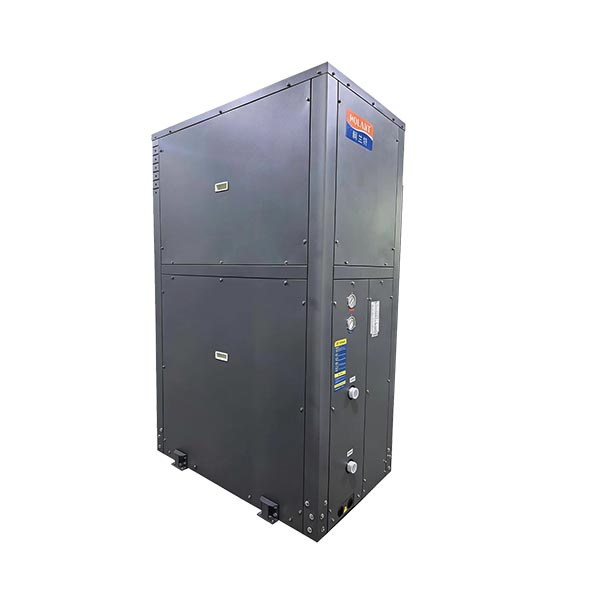
120 °C dampet varmepumpe
- Bytte ut gassfyrte kjeler
- 120℃ damp med høy temperatur
- 50% mindre energiforbruk
- trygt
- spare lønnskostnader
- Intelligent kontroll
Vi har sertifikatene: TUV ISO9001, ISO45001 (helse og sikkerhet), ISO14001 (miljø), TUV EN14825 (A+++), TUV CE, TUV CB, 38 patenter på produktteknikk, 66 utmerkelser sertifikater fra regjeringen
Arbeidsprinsipp
Vår dampvarmepumpe fungerer etter en avansert dampkompresjonssyklus. Den absorberer først lavtemperatur industriell spillvarme fra avløpsvann, eksos eller prosessoverskuddsvarme for å fordampe kjølemediet. Deretter komprimeres kjølemediedampen til gass med høy temperatur og høyt trykk, noe som frigjør store mengder varme. Denne varmen overføres effektivt til vann og genererer damp med høy temperatur. Det avkjølte kjølemediet ekspanderer og sirkulerer igjen. Med dette lukkede kretsløpet oppgraderes spillvarmen til brukbar damp med høy effektivitet, slik at 1 enhet tilført elektrisitet gir 3 enheter termisk energi.
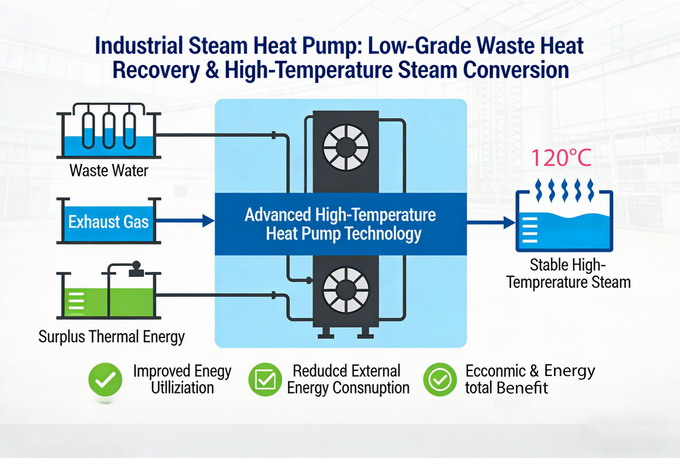
Spillvann overføres til damp
Vår industrielle dampvarmepumpe gjenvinner effektivt lavverdig spillvarme fra industrielle prosesser - inkludert spillvann, eksosgass og overskuddsvarme. Ved hjelp av avansert høytemperatur-varmepumpeteknologi oppgraderer og omdanner den denne ellers bortkastede varmeenergien direkte til stabil damp med høy temperatur. Dette lukkede systemet for resirkulering av spillvarme forbedrer energiutnyttelsen betraktelig, reduserer det eksterne energiforbruket og omdanner avfall til verdifull produksjonsdamp, noe som gir både økonomiske og miljømessige fordeler for industrielle brukere.
Bytte ut gassfyrte kjeler
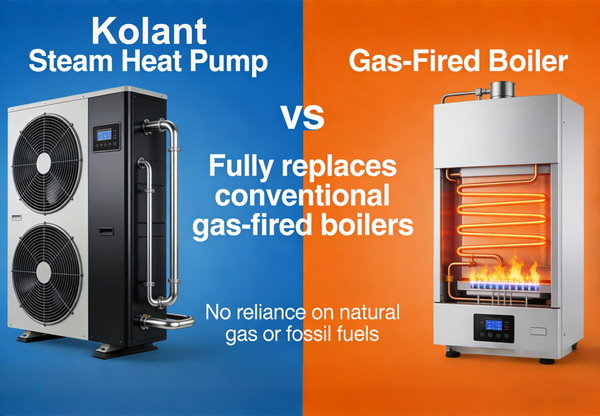
Vår dampvarmepumpe erstatter konvensjonelle gassfyrte kjeler helt uten å være avhengig av naturgass eller fossilt brensel. Ved å eliminere forbrenning helt, produserer den ingen røykgass, sot eller skadelige forurensende stoffer under drift. Dette oppnår direkte null Scope 1-karbonutslipp og reduserer karbonfotavtrykket ditt betraktelig. Det hjelper bedrifter med å overholde strenge globale miljøretningslinjer, karbonnøytralitetsmål og utslippsstandarder, samtidig som det skaper et renere, tryggere og mer bærekraftig industrielt produksjonsmiljø.
Høy effektivitet
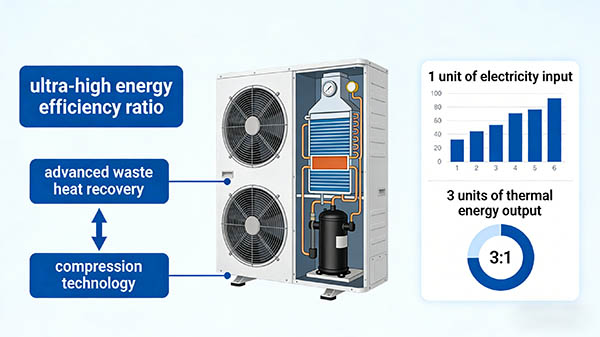
Dampvarmepumpen vår har en svært høy energieffektivitet. Ved hjelp av avansert teknologi for gjenvinning og komprimering av spillvarme kan den levere 3 enheter termisk energi med bare 1 enhet strømforbruk.
Denne høyeffektive varmeforsterkningen overgår ytelsen til tradisjonelle kjeler og elektriske ovner. Det reduserer energiforbruket og driftskostnadene betydelig, samtidig som energiutnyttelsen maksimeres. Systemet oppgraderer lavverdig spillvarme til høytemperaturdamp på en effektiv måte, og omdanner billig strøm til betydelig termisk verdi, noe som gjør det til en økonomisk og bærekraftig løsning for industriell dampproduksjon.
Mer sikker, lav pris
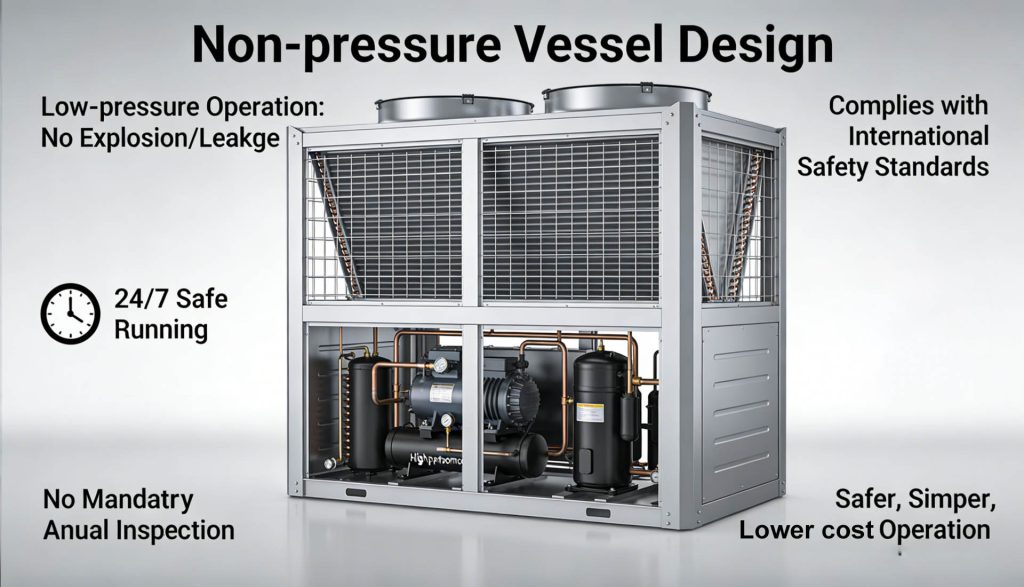
Vår dampvarmepumpe er utformet som en ikke-trykkbeholder, som fundamentalt fjerner sikkerhetsrisikoen forbundet med tradisjonelle trykkjeler.
Den opererer under lavt trykk uten skjulte farer som eksplosjon eller lekkasje, noe som sikrer stabil og sikker drift 24/7.
I tråd med internasjonale standarder for industrisikkerhet er dette utstyret krever ikke obligatorisk årlig inspeksjon, Du sparer tid, inspeksjonsgebyrer og kompliserte administrative prosedyrer.
Det gir sikrere, enklere og rimeligere drift for fabrikkene, samtidig som den høye dampytelsen opprettholdes.
Smart kontroll
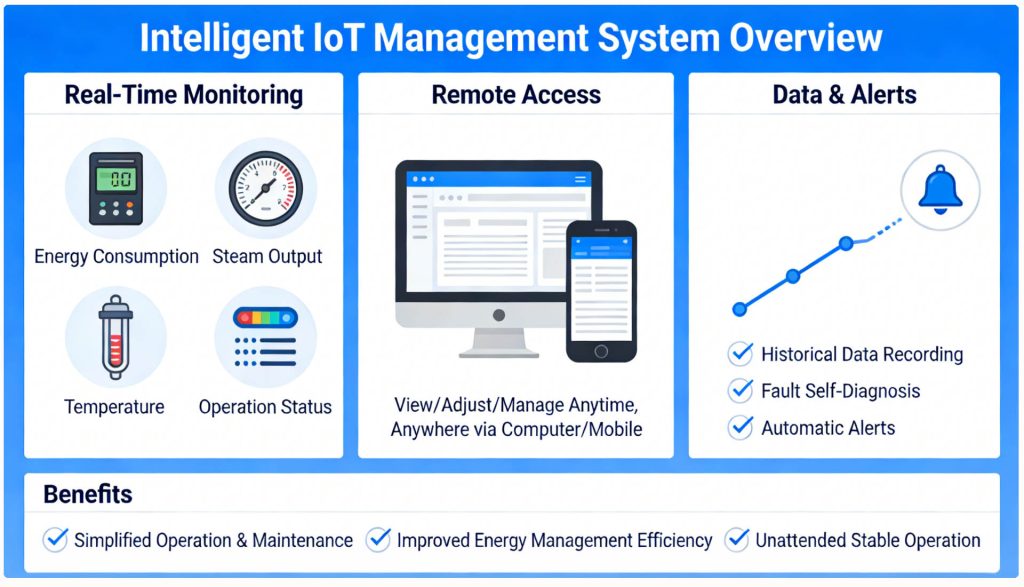
Systemet vårt er utstyrt med intelligent IoT-basert styring, noe som muliggjør full digital overvåking og kontroll.
Viktige parametere som energiforbruk, damputgang, temperatur og driftsstatus samles inn og vises i sanntid.
Brukerne kan se, justere og administrere enheten eksternt via datamaskin eller mobilenhet når som helst og hvor som helst.
Historisk dataregistrering, selvdiagnostisering av feil og automatiske varsler forbedrer stabiliteten ytterligere og reduserer manuelle inngrep.
Denne intelligente løsningen forenkler drift og vedlikehold, forbedrer energistyringseffektiviteten og støtter uovervåket, stabil drift.

Hovedpersonene:
1. Høy temperatur 120 grader C utløpsvann. Kan erstatte direkte enhver eksisterende kjele. Flott produkt for fabrikkoppgradering for kostnadsbesparelser.
2. Enkel installasjon, enkelt vedlikehold, problemfritt produkt.
3. Ekstremt energibesparende.
4. Kan kobles til solvarmesystem.
5. Alle vanntilgangsdelene er av rustfritt stål og kobber for å holde dem trygge, sunne og ikke-forurensende
。
120 °C varmepumpedampsystem: Bruksområder i bolig- og næringssektoren
I. Boligapplikasjoner: Fokus på miniatyrisering og praktisk dampetterspørsel
1. Kjerneapplikasjonsscenarier
- Bedriftskantiner og cateringkjøkken: Erstatter tradisjonelt elektrisk damputstyr for å levere 120 °C mettet damp til store dampbokser og desinfeksjonsskap på skoler og i bedriftskantiner. Ved å gjenvinne varme fra omgivelsesluften eller spillvarme fra avløpsvann kan varmepumper produsere damp med 1/3-1/4 av energiforbruket til elektriske kjeler, noe som sparer titusenvis av yuan i årlige strømkostnader.
- Renserier og klespleie: 120 °C damp oppfyller kravene til høy temperatur for stryking og tørking av klær. Sammenlignet med elektriske strykejern eller gasstørketromler har varmepumpesystemer en COP (Coefficient of Performance) på 3,2-4,5, noe som reduserer energiforbruket med over 60%. I tillegg minimerer den stabile dampfuktigheten skader på klærne.
- Oppvarming og varmtvannsforsyning til avanserte boliger: For villaer, store leiligheter osv., kombinert med gulvvarme eller radiatorer for å levere varmtvann med høy temperatur (indirekte konvertert til varme) og samtidig dekke behovet for varmtvann til husholdningen. Noen luftkildemodeller kan fungere stabilt ved lave temperaturer helt ned til -25 °C, noe som er egnet for nordlige vinterscenarier.
- Små hytter og leilighetskomplekser: Erstatter gassvarmere for å gi sentralisert varmtvann og vinteroppvarming til flere rom. Den modulære designen gir mulighet for fleksibel kapasitetsutvidelse, ingen behov for gassrørledninger og høyere sikkerhet.
2. Tekniske egenskaper ved boligscenarier
- Miniatyrisert design: De totale dimensjonene kan installeres utendørs uten å oppta plass innendørs;
- Rask oppstart: Kan produsere 120 °C mettet damp i løpet av 30 minutter for å dekke det umiddelbare dampbehovet;
- Intelligent kontroll: Støtter fjernovervåking og belastningsjustering, med damptrykksvingninger ≤±0,05 MPa, og tilpasser seg det dynamiske energibehovet i boligscenarier.
II. Kommersielle/industrielle applikasjoner: Fokus på energibesparende renovering og gjenvinning av spillvarme
1. Viktige bransjer og saker
- Matforedling og vinproduksjon:
- Anvendelsesscenarier: Damping, sterilisering, tørking og andre prosesser, for eksempel Baijiu-destillasjon, produksjon av maissirup med høyt fruktoseinnhold og sterilisering av hermetikk.
- Typisk tilfelle: Jinang Hongjitang Distillery tok i bruk 120 °C luftvarmepumpedampenheter for å erstatte tradisjonelle elektriske kjeler, som dekker et dampbehov på 300 kg/t. Driftseffekten er ≤150 kW, noe som sparer 777 600 kWh strøm årlig med en driftskostnadsreduksjon på 467 000 yuan, og investeringens tilbakebetalingsperiode er bare 2,4 år; en matvarefabrikk i Fujian bruker spillvarme fra 35 °C kjølevann til å produsere 120-155 °C damp gjennom varmepumper, med en COP på 4,2, noe som reduserer kostnadene betydelig etter å ha erstattet innkjøpt damp.
- Tekstilfarging og papirproduksjon:
- Bruksområder: Høytemperaturfiksering av tekstiler etter farging, papirtørking og rengjøring og desinfeksjon av utstyr.
- Tekniske fordeler: Gjenvinner spillvarme fra 40-90 °C avløpsvann som genereres under produksjonen, og omdanner det til 120 °C damp for resirkulering. Dette sparer over 68% energi sammenlignet med gasskjeler og reduserer miljøbelastningen fra utslipp av avløpsvann.
- Medisinsk farmasi og halvledere:
- Anvendelsesscenarier: Sterilisering av medisinsk utstyr, destillasjon og rensing i farmasøytisk produksjon og rengjøring av halvlederbrikker.
- Kjernekrav: Damp med høy renhet (oljefri kompresjon), stabil drift (99,5%-tilgjengelighet), 120 °C mettet damp oppfyller kravene til aseptiske prosesser, og null karbonutslipp er i samsvar med miljøstandardene i den farmasøytiske industrien.
- Kjemisk industri og galvanisering:
- Anvendelsesscenarier: Oppvarming av kjemiske reaksjonskjeler, konstant temperatur på elektropletteringsløsninger og destillasjon av råmaterialer.
- Energibesparende logikk: Gjenvinn ubrukt varmtvannsvarme (60-80 °C) i kjemisk produksjon, oppgrader den til 120 °C damp ved hjelp av varmepumper, erstatt tungoljekjeler, reduser de årlige CO₂-utslippene med tusenvis av tonn og senk innkjøpskostnadene for drivstoff.
- Tobakksforedling:
- Bruksscenarier: Rehydrering og oppvarming av tobakksblad i produksjonslinjer for tynne ark.
- Resultater: En mellomstor tobakksfabrikk i Yunnan tok i bruk et 120 °C varmepumpedampsystem som gjenvinner spillvarme fra 80-90 °C eksosgass fra skjæremaskiner for tobakk. Svingningene i fuktighetsinnholdet i tobakksbladene ble redusert fra ±1,5% til ±0,3%, produktkvalifiseringsgraden økte til 99,7%, og energiforbrukskostnadene falt med 68%.
2. Kjernefordeler i kommersielle scenarier
- Energisparing og karbonreduksjon: COP på 2,0-4,2, noe som sparer 46%-70% energi sammenlignet med elektriske kjeler og reduserer CO₂-utslippene med over 50% sammenlignet med gasskjeler. Noen prosjekter kan få subsidier fra lavkarbonpolitikken;
- Gjenvinning av spillvarme: Kan utnytte varmekilder med flere kilder, for eksempel industrielt avløpsvann, avgass og luft. Den er spesielt egnet for bedrifter med spillvarmeutslipp, og realiserer “energikaskadeutnyttelse”;
- Sikkerhet og pålitelighet: Ingen åpen flamme eller lagring av drivstoff, slik at man unngår fare for kjeleeksplosjon. Den modulære designen støtter redundant drift, og svikt i en enkelt enhet påvirker ikke den totale produksjonen;
- Kostnadskontroll: Driftskostnadene er bare 1/3 av kostnadene for elektriske kjeler og 1/2 av kostnadene for gasskjeler. Tilbakebetalingstiden for investeringen er vanligvis 2-5 år, og den kan forkortes til mindre enn 2 år i enkelte energikrevende industrier.
III. Kjerneforskjeller og forslag til tilpasninger mellom private og kommersielle bruksområder
| Dimensjon | Boligsektoren | Kommersiell/industriell sektor |
|---|---|---|
| Dampetterspørsel | Lav (≤50 kg/t) | Høy (50-5000 kg/t) |
| Valg av varmekilde | Hovedsakelig luftkilde (ingen gjenvinning av spillvarme nødvendig) | Prioriter vannkilder (gjenvinn prosessavløpsvann/avtrekksvarme) |
| Kjernekrav | Praktisk, kostnadsbesparende, lite fotavtrykk | Energisparing, stabilitet, lavt karbonavtrykk, prosesstilpasningsevne |
| Typisk utstyr | Alt-i-ett-enhet for små enheter (≤30 kW) | Modulær enhet (30 kW og over) |
| Investeringsskala | Titusenvis av yuan | Hundrevis til millioner av yuan (avhengig av kapasitet) |
IV. Anvendelsesmuligheter og merknader
- Potensial for forfremmelse: Drevet av “dual carbon”-politikken er det sterk etterspørsel etter utskifting av kjeler i den kommersielle sektoren, spesielt i regioner med strenge miljøkrav som Yangtze River Delta og Pearl River Delta. I boligsektoren oppgraderer den til miniatyrisering og intelligens, og tilpasser seg homestays, high-end boliger osv.
- Merknader:
- Kommersielle scenarier krever en stabil varmekilde (f.eks. 60 °C+ avløpsvann/avgass), ellers er det nødvendig å bruke en luft/luft-varmepumpe-kombinasjon;
- Kravene til vannkvaliteten er relativt høye; mykt vann eller rent vann bør brukes for å unngå kalkavleiringer på utstyret og redusert effektivitet;
- Isolering av damprørledninger bør vurderes under installasjonen for å redusere varmetapet og forbedre den generelle energieffektiviteten.
Teknisk parameter
| Modell: SYRB-610EH/SN11-ST | |
| Generelle spesifikasjoner | |
| Nominell strømforsyning | 380 V ~ 50 Hz |
| Maks. driftseffekt | 25 kW |
| Maks. driftsstrøm | 40 A |
| Vanntett kvalitet | IPX4 |
| Beskyttelse mot elektrisk støt | Klasse I |
| Lydtrykknivå | 60 dB(A) |
| Enhetens dimensjoner (B×D×H) | 770 × 1310 × 2004 mm |
| Enhetsvekt | 750 kg |
| Kuldemedium | R245fa |
| Maks. trykk på kildesiden (utløp/sug) | 2,6 MPa / 0,7 MPa |
| Maks. trykk på vannsiden (utløp/sug) | 2,6 MPa / 0,7 MPa |
| Vanntrykkfall på kildesiden | 50 kPa |
| Nominell vannføring på kildesiden | 8 m³/t |
Ytelse under ulike forhold på kildesiden (damputgang 120 °C)
| Testbetingelser | Vannkilde innløp/utløp (°C) | Oppvarmingskapasitet (kW) | Total innmating (kW) | Strøm (A) | COP |
| Sak 1 | 45 / 40 | 40 | 17 | 28.6 | 2.35 |
| Sak 2 | 50 / 45 | 45 | 17.7 | 29.7 | 2.54 |
| Sak 3 | 55 / 50 | 50 | 18.5 | 31.1 | 2.7 |
| Sak 4 | 60 / 55 | 55 | 19.3 | 34.3 | 2.85 |
| Sak 5 | 65 / 60 | 61 | 20.3 | 34.2 | 3 |


